Food Franchise With No Storefront: Does It Exist? (2026)
Yes. There is a food franchise with no storefront and no commercial kitchen. Wiki-Licious is a home-based food franchise built around one product, the malasada, Hawaii's donut. You make them fresh in a home or shared kitchen and sell them where you choose. No lease. No truck. No build-out before you sell your first box.
Most people never get that far. They look at a food franchise, see the storefront lease and the kitchen build-out, and quietly close the tab. That's the wall. This post is about the way around it.
What does "no storefront, no commercial kitchen" really mean?
It means the business runs out of a kitchen you already have access to, and sales happen where the people are, not where the rent is. A home-based food franchise is a licensed business system (the product, the recipe, the training, the brand) designed to run from a home kitchen instead of a leased building.
With Wiki-Licious, the whole setup fits on a counter. Three pieces of equipment: a high-end home kitchen mixer, electric fry pans, and a custom cutter so every malasada comes out the same size. That's it. No hood system and no contractor.
Is it legal to run a food franchise from a home kitchen?
In many states, yes, under cottage food law. Cottage food law is the set of state rules that let you make certain foods in a home kitchen and sell them directly to customers. The rules differ from state to state, and some states limit fried or filled foods.
Where a home kitchen isn't allowed, there are two simple paths: rent time in a shared commissary kitchen, or partner with a licensed food business that already has one. Either way, you don't build or lease a kitchen of your own. We wrote a plain-English guide on cottage food law for donuts if you want the detail for your state.
How is this different from a storefront franchise or a food truck?
You skip the lease and the vehicle, and you keep the part that matters: a product people line up for.
| Storefront franchise | Food truck | Wiki-Licious (home-based) | |
|---|---|---|---|
| Where you make the food | Leased commercial kitchen | Truck kitchen plus a commissary | Home or shared kitchen |
| Where you sell | One fixed address | Wherever you can park | Events, markets, fundraisers, wholesale, pickup orders |
| Build-out before opening | Yes | Yes, the truck itself | Three pieces of counter equipment |
| Staff on day one | Usually | Often | You, or you and a partner |
| Schedule | Set by store hours | Set by the route | Your terms |
If a truck was your plan B, read the food truck alternative first. It walks through what a truck asks of you before you ever sell a thing.
What do you sell?
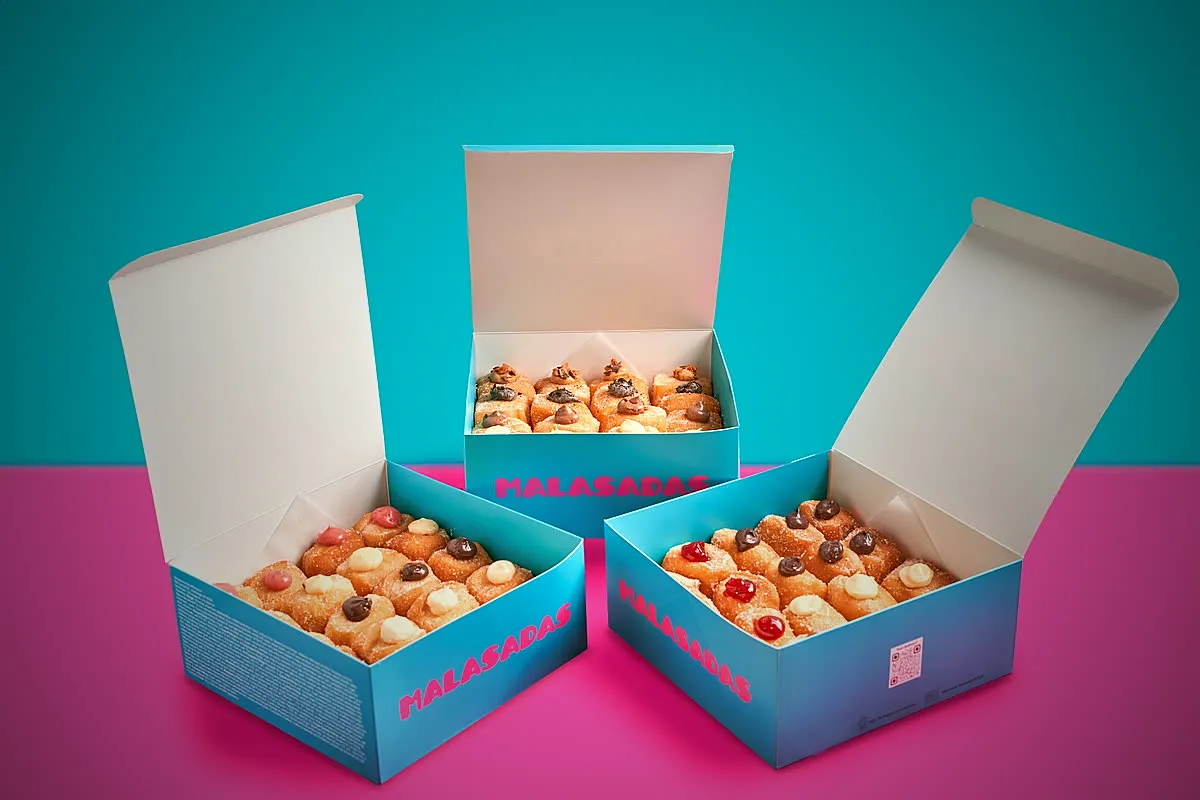
One product: the malasada. A malasada is Hawaii's donut. It's soft, holeless, rolled in sugar, and filled fresh with cream, fruit, or chocolate. Most towns have nothing like it, which is why the line forms.
They're quick to make. A trained franchisee turns out roughly 150 to 200 in about an hour and a half. You learn the make and the sell: events and markets, school and team fundraisers, wholesale to coffee shops, and pickup orders from home.
Where did this model come from?
Amy Johnson started Wiki-Licious in Alaska. First shaved ice, then malasadas made from her own house in Anchorage, with no storefront and no truck. Customers found her anyway. The system she built to run it from home is the same one franchisees use today. Wiki-Licious is headquartered in Anchorage, AK.
Who is a home-based food franchise a good fit for?
- People who've priced a storefront or a truck and want a lower-overhead way in.
- Event and market vendors who want something to sell in the off-season, not just summer weekends.
- Couples and families who want to build something together, on their own terms.
- Anyone who already sells food at events and wants to add a product nobody else has.
How do you get started?
Territories are one per area, so the first step is a check: is yours still open? Tell us your city. If it is, we'll walk you through exactly how it works on a relaxed 20-minute call. No obligation. Training covers the make and the sell before you fry your first batch for a customer.
Check if your area is open for a Wiki-Licious franchise.
Still have questions?
Do I need a commercial kitchen to start?
No. You make the malasadas in a home or shared kitchen. If your state doesn't allow a home kitchen for this product, use a commissary or partner with a licensed food business.
Do I need a storefront or a food truck?
No. There's no lease and no vehicle. You sell at events, markets, fundraisers, wholesale, and pickup orders.
What equipment do I need?
Three pieces: a high-end home kitchen mixer, electric fry pans, and a custom cutter we send you. It all fits on a counter.
This is not an offer to sell a franchise. A franchise is offered only through our Franchise Disclosure Document.
